Uncategorized

Uncategorized

Caring for your dog’s health and wellbeing.

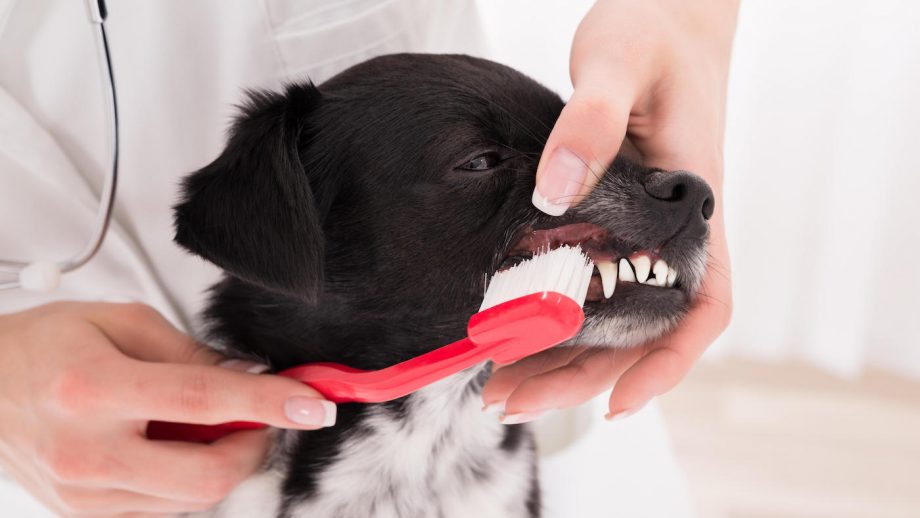
We cannot command those we cannot care for.  There is a husbandry aspect to dog training that I really like.  It’s another topic that fits under “ways to strengthen your bond with your dog” in my mind.  Also who doesn’t love to be told that your dog is looking good!?   Here are some questions to ask yourself whether you CAN do them- does your dog allow you and DO you do them- do you prioritize them:  Maybe you were reading along fine until number 3 and then your heart rate spiked.  Nails, the dreaded nails.  Whether you’re clipping them or using a dremel, I would say less than 75% of my pet owning clients tend to their dogs nails.  There is a knowledge gap for sure but usually people are uncomfortable because they know their dog doesn’t like it.  Maybe you’ve seen all the videos about wrapping your head in Seran wrap and lathering it with loads of peanut butter so you can trim your dog’s nails.  Working towards a place where you can trim your dog’s nails is a great goal and one that a reputable trainer can help with.  And that goes for all of these numbers.  You might think “why would I need to pick my dog up?”  Well you don’t know until you’re in a situation that is probably an emergency and let me the first to say that in a panicked situation where your dog has never been held, you aren’t going to walk away unscratched.  Everyone in Colorado (where I used to live) hiked with their dogs, so it was imperative people practiced in case their dog got wounded on a trail.  It’s another form of trust and a stress inducing situation where you and your dog work through it together and come out on the other side even stronger.  Your dog should allow you to pick them up without pushback.  You know who does animal husbandry really well?  Horse owners.  If you’ve ever ridden a horse than you know there is a lengthy setup process that involves brushing, looking at the hooves, and the same is said after a training or horse ride.  It’s part of the relationship with the horse and it helps form a connection to this giant animal where you get onto their back.  Why should the same not be true with animals who live in our house and are maybe even sleeping in our beds?
Uncategorized

How many repetitions does it take for a dog to really know a command?

Hundreds. Literally hundreds. One of the most common errors I see with clients is rushing through the foundations of training and trying to get the dog to obey in a much more complicated environment. In order to have a dog listen very well in places with lots of distractions (often out on a walk) the dog must master understanding the commands perfectly in places with low distractions. I like to use the analogy of a video game with my clients. In order to get to level 10, which is a walk around the neighborhood with all the dogs, scooters, people etc., you need to first conquer levels 1-9, each one becoming more and more distracting. If the dog doesn’t understand the command in your house, they can never understand it outside. If they cannot understand it outside, they’ll never obey at rush hour when the neighborhood is full of commotion. It’s never too late in your training to go back to basics and refresh your dog on the foundations of a command that they may already know. Don’t be intimidated to go back a few steps, dust off the cobwebs, and prepare your dog for the warm weather months that come with lots of distractions!

Uncategorized

Resource Guarding: What is it and what to do about it.

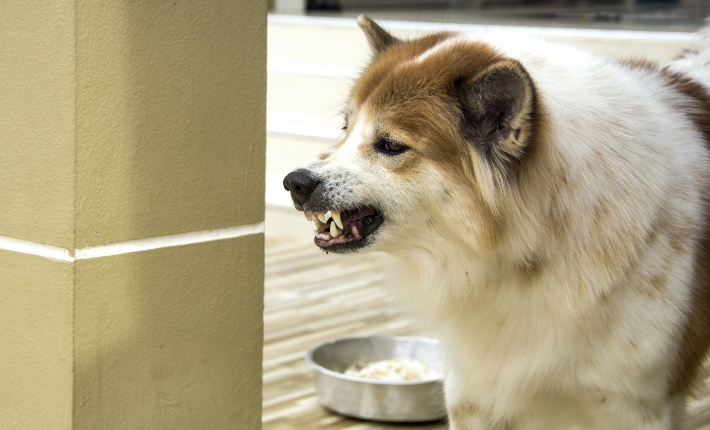
First things first: Do not touch your dog’s food while it is eating. This is one of the biggest myths among the masses related to dog training and if your dog has already shown resource guarding tendencies, DEFINITELY don’t do it. There are other ways to work towards a better relationship with your dog. Let’s talk about the theory that myth is routed in, given that it’s one of the most common I hear clients tell me. Dogs are pack animals and in the wild they develop pack order where the leader exhibits certain behaviors and the pack show other favorable behaviors towards the “leaders”. This myth of touching your dog’s food acknowledges that as humans in the house, we need to show some dominance towards our dog so they understand WE are the pack leaders. While I do not disagree with that mindset, I disagree with the approach. All you will do is add fuel to that fire and continue to instigate poor habits in your dog. What is resource guarding? I like this definition on the “Preventative Vet” website: “When a dog reacts unfavorably when they perceive a threat to a valuable resource in their possession.” The nonsensical thing to humans is often that there is NO threat or the object isn’t valuable to us. For example, I just had a client tell me their dog was going after a tissue when the owner grabbed it and the dog lashed out. But we aren’t talking about OUR perspective – we are talking about the dog’s. The reasons I see dog’s resource guard the most: The best thing you can do for your dog is work with a professional trainer who has experience with resource guarding, as every dog is different and diagnosing a fix requires eyes on the dog and the behavior. I think of resource guarding on a spectrum and just because I see certain behaviors coming from a dog that seem not ideal, I do not automatically label them a resource guarder. Just because my dog doesn’t like our toddler near his food (which we do not allow anyway) and he makes a low growl, doesn’t mean that is unreasonable. In my mind that is a boundary that is fair to the dog and the household respects that. Dogs eat in their own room in our house so there is no drama. Rules and boundaries go both ways. In the interim. here are a couple things you can do to try and limit the behavior.

Uncategorized

Why Board & Trains are worth the spend.

Send your dog away for a month and pay a lot of money for training?!  What makes board and trains worth it all?  I have seen some unbelievable rehabilitations and changes in dogs due to B&T’s and it’s why I wanted to offer them in the first place.  Many trainers do not because it is exceptionally time consuming and limits them from working with a variety of dogs.  That’s why I made my model such that during the months I take a few B&T dogs, I limit my private sessions significantly so I can dedicate the proper time to my temporary live-ins.  Every board and train starts with a consultation if you are not an existing consult and includes 2 post-consults.  Afterall, I can upgrade your dog during a month but if it returns to a household that cannot uphold the new rules and boundaries, the dog will return to its previous ways.  A real diagnosis Removing a dog from its primary environment will show a lot of different behaviors.  It’s why I train primarily in my facility instead of home visits:  both have their benefits but getting a dog out of its cozy environment to train adds extra levels of good stress the dog will have to work through.   Clients most often can tell me about their dog’s bad behaviors in the home, which gets added to their notes.  In addition to those behaviors, I get to immediately see what bad behaviors emerge in new environments.  Imagine how fast you can change your dog’s bad behaviors in your home if they can learn to regulate themselves in new places?   Exposure to different places There is virtually no limit to the places I take board & trains once they’ve shown me they can handle it.  Remember, all dog training needs to be customized and starts with meeting the dog exactly where they are.  Over exposure to stressful situations too early is a sure way to set a dog back on its progress.  Remembering that dogs learn in context, you need to practice your obedience in several different locations each week.  Most clients do not have the capacity to designate that much time to their furry friend.  In a single week and depending on your dog’s abilities, I might take her to Home Depot, Cabela’s, a brewery, coffee shop, 3 parks, and to sit outside Central Market on a busy Saturday morning.  All with the intention of practicing calm and stable behaviors in addition to obedience.  Consistency  Throughout your day with the usual hustle and bustle of your routine, it is very hard to stay 100% consistent with your dog.  Every time you tell your dog to lay on their place, are you going to be able to fix them every single time they get up?  4 weeks of unrelenting consistency does wonders for a dog, even if they return to a household that is much less consistent.  Stable Dogs You know why it’s hard to reform reactive dogs?  Because we are constantly surrounded by other reactive dogs!  It is very frustrating when you go to take your dog out on a relaxed walk and every dog you pass is barking and thrashing on a leash attempting to interact with your dog.  Boarding your dog in a place where there are stable dogs that choose not to interact with them is hard to come by.  Neutrality towards other dogs makes up the majority of what we strive for in socialization.  Adding in a stable dog laying on a cot nearby when a B&T dog is practicing obedience is a great distraction that starts to build a bridge in the dog’s understanding that not all dogs are a threat.  Unlimited Resources Maybe not unlimited, but do I have a large arsenal of tools that help with dog training? Absolutely.  And the knowledge to do so.  Dogs all progress at different levels and having an environment that can meet them at their speed is imperative to getting the most out of your B&T.  You wouldn’t want to part ways with your dog for a month only to find out that your trainer couldn’t take your dog to the next level due to their lack of knowledge.

Uncategorized

How to handle off-leash dogs

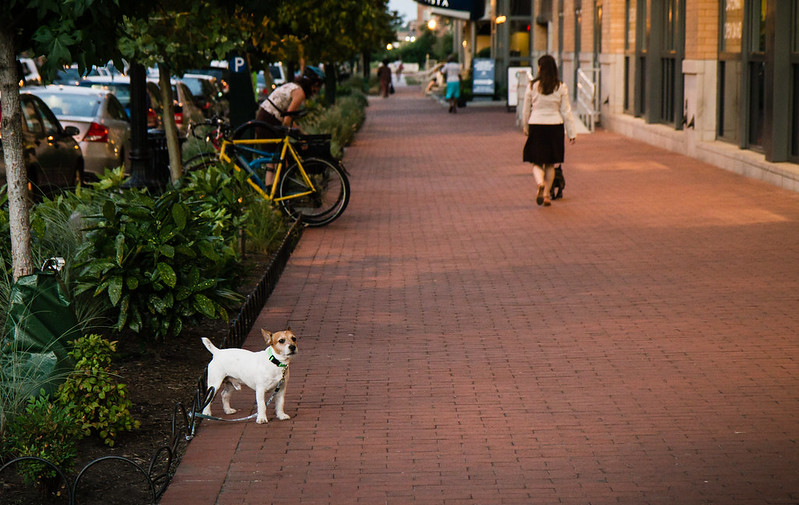
The weather is warmer, the sun is shining, people are outside. You know what that means… dogs will be coming up to you either on a long retractable or without a leash at all. Once a week my clients are having unfavorable interactions like these and it’s extra frustrating when you’re spending time and money on training your dog! Here are the tips I recommend if you encounter an off-leash or long-line dog. It’s up to the owner to be vigilant. If you’re walking your dog in a populated area, I try to minimize multi-tasking so I can be aware of loose dogs that might approach. Remember, there is a whole population of people out there who believe random dog meetings on leash are great and you might hurt their feelings when you tell them to back up. That’s okay! They need to learn that different dogs have different boundaries. It’s always in your best interest to continue your walk without your dog meeting random dogs.

Uncategorized

Caring for your dog’s health and wellbeing

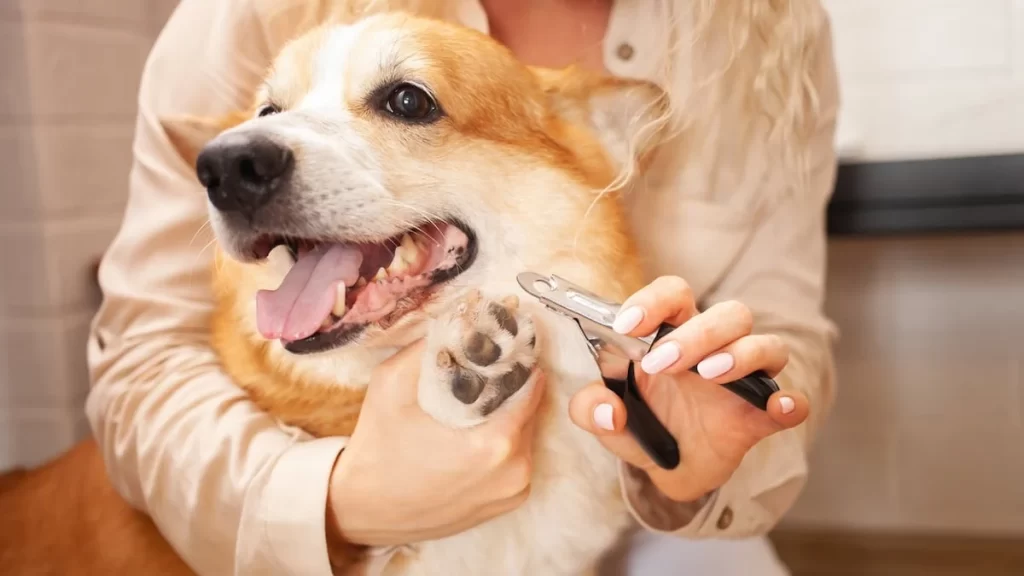
We cannot command those we cannot care for.  There is a husbandry aspect to dog training that I really like.  It’s another topic that fits under “ways to strengthen your bond with your dog” in my mind.  Also who doesn’t love to be told that your dog is good looking?   Here are some questions to ask yourself whether you CAN do them- does your dog allow you and DO you do them- do you prioritize them:  Maybe you were reading along fine until number 3 and then your heart rate spiked.  Nails, the dreaded nails.  Whether you are clipping them or using a dremel, I would say 1/4 of my pet clients tend to their dogs’ nails.  There is a knowledge gap for sure but usually people are uncomfortable because they know their dog doesn’t like it.  Maybe you’ve seen all the videos about wrapping your head in Seran wrap and lathering it with loads of peanut butter so you can trim your dog’s nails.  Working towards a place where you can trim your dog’s nails is a great goal and one that a reputable trainer can help with.  And that goes for all of these numbers.  You might think “why would I need to pick my dog up?”  Well you don’t know until you’re in a situation that is probably an emergency and let me the first to say that in a panicked situation where your dog has never been held, you aren’t going to walk away unscratched.  Everyone in Colorado (where I used to live) hiked with their dogs, so it was imperative people practiced in case their dog got wounded on a trail.  It’s another form of trust and a stress inducing situation where you and your dog work through it together and come out on the other side even stronger.  Your dog should allow you to pick them up without pushback.  You know who does animal husbandry really well?  Horse owners.  If you’ve ever ridden a horse than you know there is a lengthy setup process that involves brushing, looking at the hooves, and the same is said after a training or horse ride.  It’s part of the relationship with the horse and it helps form a connection to this giant animal where you get onto their back.  Why should the same not be true with animals who live in our house and are maybe even sleeping in our beds?
Uncategorized

Socializing Dogs: Do’s and Don’ts

When I tell clients that I advise they do not take their dogs inside a dog park, the response is usually “But how am I supposed to socialize my dog?”  I will cover dog parks extensively in another blog post, so let’s focus just on what socialization should be for dogs.   The Oxford Dictionary’s second definition is spot on for what I tell clients: “The process of learning to behave in a way that’s acceptable to society.”  My mentor used to use this funny example when he’d talking socializing to clients.  He’d say “If I walked into Chili’s and my 3 year old daughter started walking up to every table and giving them hugs, that would be inappropriate.”  Though by many standards of dog owners, that’s what we expect from dogs!  Be able to go to a dog park and intermingle with each dog, go to a brewery and let strangers pet you.  Why do we think we want that?  Because it’s convenient and less confrontational in our lives to never tell other people or dogs “No?”  There are many times dogs are BEGGING their owners to just say “no” and because that hasn’t happened, we’ve in turn creatine reactive, superstitious, less than ideal behaviors in our dogs.  I did it to Onyx.  The signs were there that he didn’t want to be flooded by other dogs and I ignored them, and I’ve been managing him closely ever since.  Dogs are living in our world, so “acceptable to society” means that dogs have to learn to chill out around the constant stress and whirlwind that is our reality.  Try to change your mindset around socialization to this:  90% of dog socialization is neutrality.  We want our dogs to be calm, mostly disinterested in other dogs and people.  How do we create that?  By showing our dog over and over that you don’t need/have to/ get to interact with every dog that passes you on the street, and the same is for humans.  Have you ever thought about why you cannot pet dogs that are training to be service animals or working dogs?  Maybe just once you thought “psht, I am not going to mess that cute dog up if I pet him! Just let me!” Because how can a dog properly relax and focus on a job if they think every person the pass might touch them, whether they love it or hate it!  Imagine going to the airport and wondering if every person you passed might strike up a conversation with you.  Would you be relaxed?  Even as an extrovert, I would absolutely hate that!  In my old neighborhood in Colorado there were many houses and I would guess 1 out of 3 homes had at least 1 dog.  You know what that means- walking by dogs all the time.  When we would head out for a walk, 90% of dog owners up ahead would cross the street to the other side before we were even 50 feet from them.  It never ceases to amaze me… that with my calculation only 10% of dog owners thought their dogs could handle walking by another dog while both leashed up!  I would guess many of those dog owners take their dogs to dog park and may not have any issues.  What’s that about!?  So if 90% of dog socialization is neutrality, what’s the other 10%?  That’s your pack: the other dogs at home or your best friends’ dogs they see all the time.  It’s the exception to the rule where you’ve pressure tested the dynamics and you’ve put in the time to manage the relationship so it shouldn’t have problems moving forward.   This is one of the main topics I discuss with clients whether you have a dog with some reactivity or you just got a puppy and want to make sure this doesn’t become an issue.  It’s something Magnus K9 can help with!

Uncategorized

Dogs and Babies.

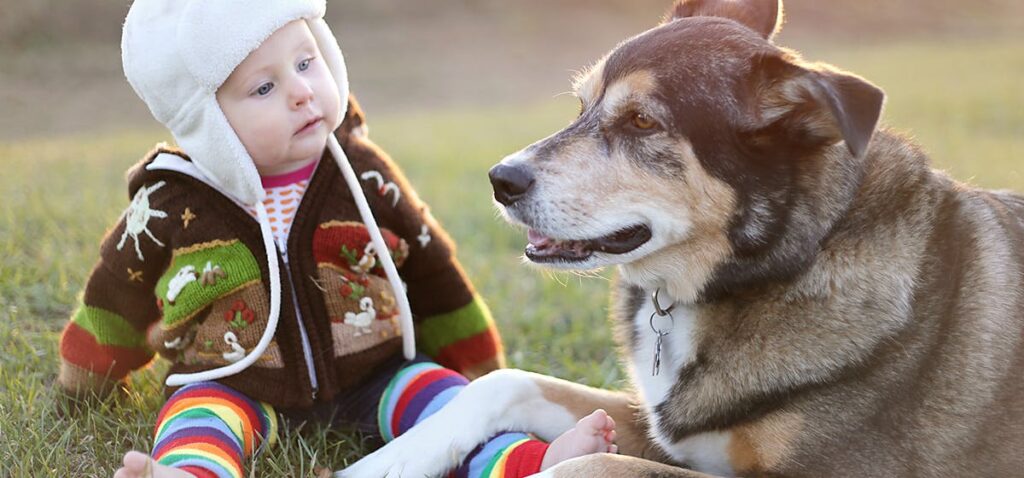
I have the pleasure of working with a few clients right now who are expecting their first child!  It’s such an exciting time and reminds me of when I was expecting our first, 2 years ago. When I learned I was pregnant in 2023, I was determined to make changes early to start implementing a plan for our 3 dogs that would set them up for success before our baby arrived.  Some of the ideas were simple: no more dogs on the couch.  Some of them were more complicated: heeling well with a stroller.  If you take away anything from this post, let it be this: You NEVER know how your dogs are going to react to a baby so why not err on the side of caution knowing you can always give the dogs back more freedom in the future if all is going well.

Uncategorized

When positive reinforcement is no longer enough.

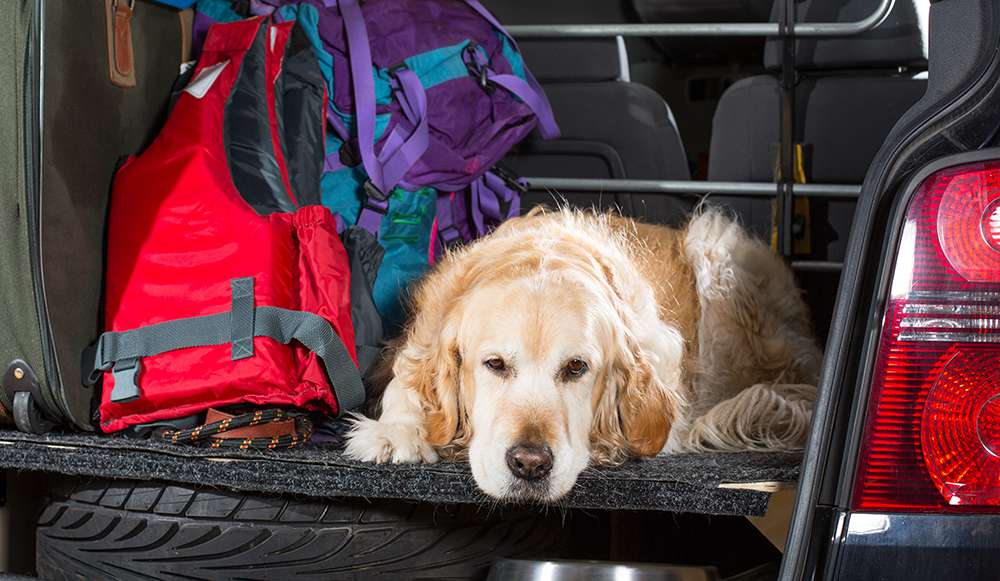
This could be a reality for you:  You’ve trained your dog only using food for many years and everything has gone great.  There has never been a day where you’ve needed any other form of communication.  But then out of the blue, one day your dog stops doing something you need it to and you panic.  How are you going to be able to overcome this disruptive challenge? A client called me when her 100 pound golden doodle stopped loading up in her car on his own.  This client is a 72 year old woman who this doodle in addition to an 80 pound doodle and has no capability to pick these dogs up on her own.  It created panic because she was getting ready to do a long drive across many states where the dogs would have to go out at gas stations to potty.  “If I try and force him up with his collar, I am afraid he is going to slip his collar at some rest stop and then what do I do?!”  This dog used to load up with treats as a motivation no problem and one day stopped for reasons unknown to humans. Now what? This is one of the major issues when it comes to training a dog with positive reinforcement methods (food) only: There is no way to tell a dog “you must do this,” because the dog can always refuse food.  My training and philosophy is such that there must be a way to hold your dog accountable when you give it a command.  Equally as important, you must have a way to tell your dog no.  “No, you cannot jump on grandma” “no, you cannot dig through the trash”  “no, you cannot choose to not load up in the car, you must.”  Dogs all have a stress threshold and most dogs show you when they’ve crossed it because they stop taking food.  Even bottom feeder dogs like mine; I know when I’ve crossed Onyx’s because he won’t take his kibble.  It is important when you reach this pivotal crossroad that you have a way to guide your dog through the stress and ensure they come out on the other side unscathed.  Similar to humans, stress is inevitable in dogs and if they never have to work through it, it can build poor behavior and is a fast track to having a reactive dog.  This is why I talk and work a lot with clients on “stress inoculation”: created controlled stressful situations where you work collaboratively with your dog on them so they know they can handle stress in the real world!  Back to the client with her doodle:  She had tried providing him higher and higher value treats until she was throwing hot dogs into the car and he eventually stopped taking them.  This is a slippery slope with positive reinforcement because now you showed your dog that if he refuses his regular DOG food, he can hold out until he gets practically whatever he wants from your pantry.  We decided to implement a car ramp and brought in a slip leash.  If you read my post about tools, you know that a proper slip leash tightens around the dog’s neck when pressure from the handler is applied and then loosens when pressure is released.  It ensures a dog cannot slip the leash/back out of it, and the dog learns quickly that they must adhere to the direction their owner wants them to go or the annoying pressure is not removed.  The ramp wasn’t enough in this situation for the doodle because he simply did not want to go up the ramp, but together with the slip we showed him that he MUST go up the ramp into the car.  After all, dogs are living in a human world and there are things that they must do and must not do to live harmoniously with us in it.  That is the reality.

Uncategorized

Heeling is Healing

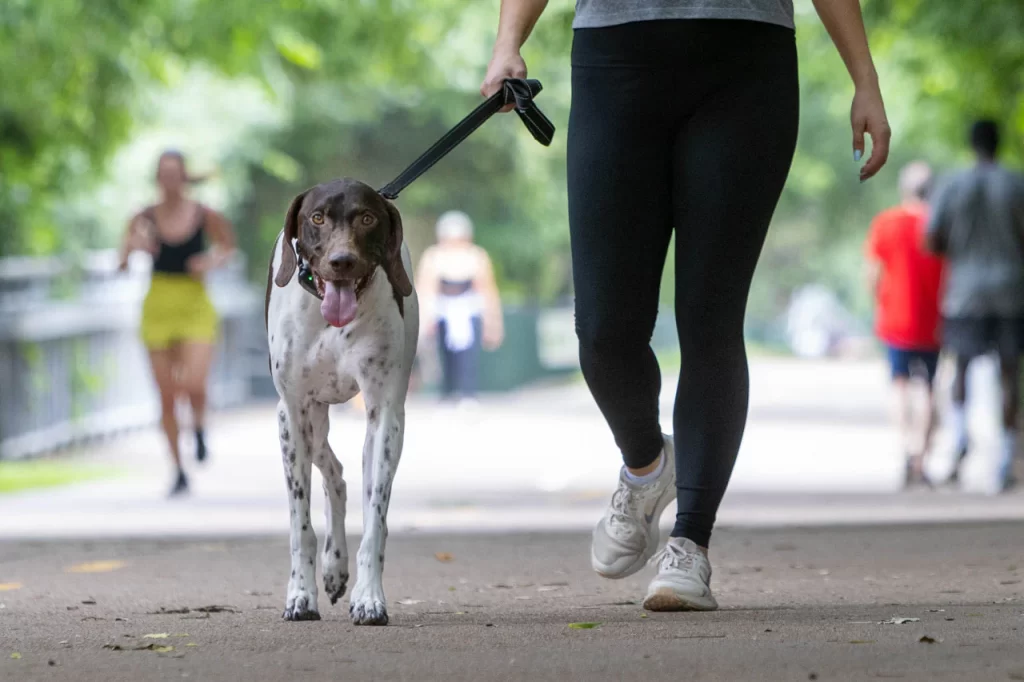
I was at a conference and this attendee had a shirt that said “heeling is healing” and it’s one of the truest things in life.  A dog heeling next to you is like the sensation when you’re cutting wrapping paper and the scissors start to glide, or when you get done house work outside in the heat, you’re sweaty and smell like grass and you crack a cold beer. Ahhh. Namaste.  If you read my post about tools, you can deduce that a few types were created for the sole purpose of getting a dog to walk better on a leash.   Why is heeling such a difficult command for a dog?  I cannot answer that question without writing a formal dissertation so I am going to give a couple examples that hopefully resonate.  We aren’t talking about a formal heel or fuse for the sake of this discussion.  Just a nice, loose leash walk on a specific side of your choosing.  Has the dog ever been taught that pulling doesn’t get it what it wants? If you ever let your dog pull you part of the way to the dog park and then let him off the leash to run around as a reward, you have reinforced the #@&% out of that behavior.  The dog has learned that indeed pulling you around is EXACTLY how he gets what he wants.  That’s the number one reason I believe that dogs are poor walkers. They actually think they are taking YOU on a walk, not the other way around. There has never been a communication system that told them the rule is if you walk nicely on a leash then you’ll be able to sniff around and enjoy the outdoors. How’s your engagement with your dog? If your dog doesn’t have a strong foundation where she knows that engaging with you will get her the things she wants, you are dead to her.  Her senses are going crazy, she’s got smells to smell and things to look at and if she isn’t look at you in the slightest, how can she know where you are to walk alongside of you?? Do you have the same path you walk with your dog most days? Dogs are exceptionally routine creatures and they learn to associate things together and create patterns very quickly.  Anticipation can be a great thing when working advanced obedience or sport dogs, but it can be a real pain for pet owners.  If your dog knows where they’re going, where the great smells are, which dog will bark over the fence at them, etc. you are really going on THEIR walk.  They know that space so well and now you are going to be getting jerked around while they take you on crazed smelling spree.  At Magnus we address heeling the same way we start with any behavior, at the beginning. We teach your dog commands, engagement, confidence, and then heeling comes as part of that.

Scroll to Top